
Cómo elegir la máquina de envasado de salsas adecuada para su producto.
Centro de conocimientos sobre embalajes

Si busca soluciones de automatización de embalajes, póngase en contacto con nosotros y estaremos encantados de ofrecerle la solución más personalizada.
A sauce packaging machine is designed to fill, seal, and protect sauces, condiments, and other liquid or semi-liquid products in pouches, sachets, or bags. Choosing the right machine depends on your product viscosity, particulate content, package format, hygiene requirements, and production speed. In this guide, we explain the main types of sauce packaging machines, compare filling systems, and show how to select the best solution for your application.
What is the Best Filling System for Sauces: Piston Fillers vs. Pump Fillers?
Before evaluating the external structure of a packaging machine, you must first look at its heart: the dosing system. The biggest mistake a food manufacturer can make is pairing the wrong pump with their product. The choice of filling system is dictated entirely by the liquid's viscosity and particulate content.
Piston Fillers: The Champion of High-Viscosity and Chunky Sauces
Piston fillers operate using a volumetric cylinder and a precisely machined piston. As the piston retracts, it draws a specific volume of sauce from the hopper into the cylinder; as it pushes forward, it dispenses that exact volume into the pouch.
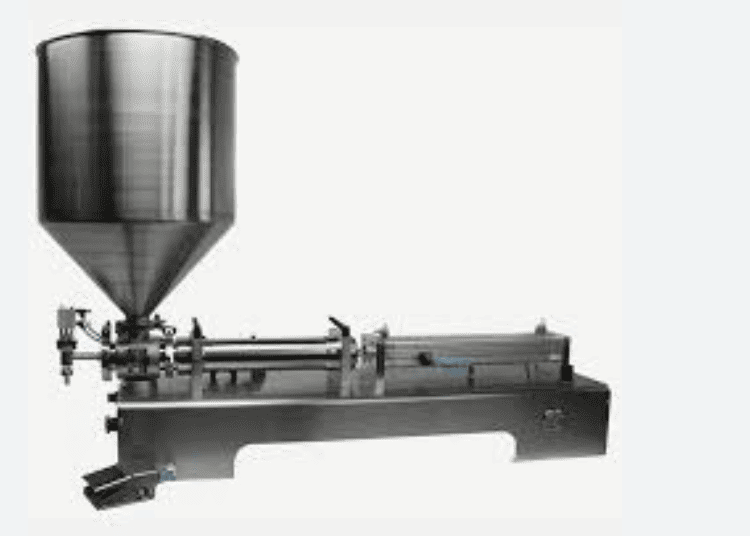
- Why it matters: Piston fillers provide unparalleled accuracy for thick, heavy, or sticky products. They possess the mechanical force necessary to push viscous liquids through the nozzle without clogging.
- Handling Particulates (The Rotary Valve Upgrade): While piston fillers are ideal for sauces containing particulates (like salsa with tomato chunks or tartar sauce with relish), standard check valves will crush the food or become jammed. To handle chunky sauces successfully, the piston filler must be equipped with specialized rotary valves and wide-bore nozzles designed to pass solid pieces without damaging the product's texture.
- Ideal Applications: Mayonnaise, thick ketchup, peanut butter, honey, and chunky pasta sauces.
Pump Fillers (Rotor or Peristaltic): The Solution for Free-Flowing Liquids
For liquids that flow easily under gravity, pump fillers are the standard. These systems use rotating gears or compressing rollers to move the liquid continuously.
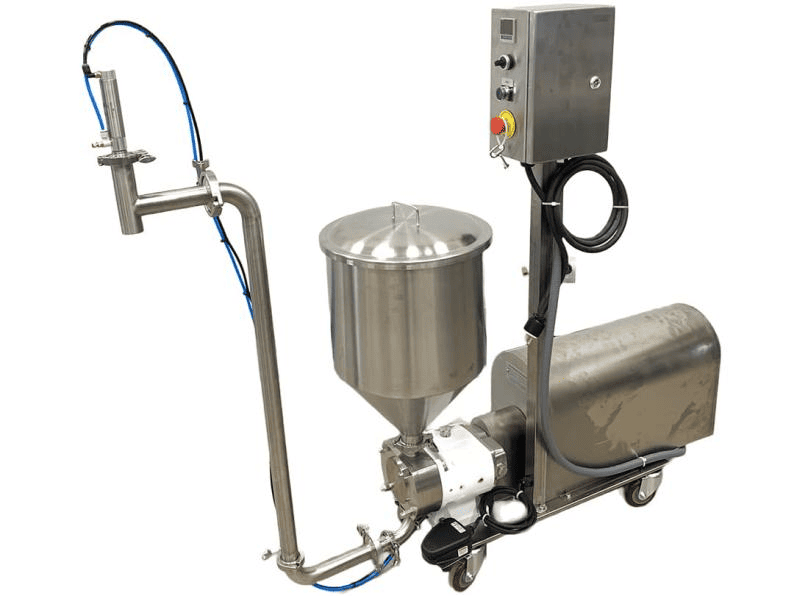
- Why it matters: They are incredibly fast and ideal for continuous motion packaging lines where high-speed output is the primary goal.
- Ideal Applications: Soy sauce, vinegar, thin salad dressings, edible oils, and clear broths.
What Are the 4 Key Types of Sauce Packaging Machines?
Once the correct filling mechanism is determined, the next step is selecting the machine architecture that forms and seals the final package. The industry relies on four primary configurations, each serving a distinct market segment.
1. Vertical Form Fill Seal (VFFS) Machines for Liquids
VFFS machines are the backbone of high-volume liquid packaging. They utilize a single roll of flat film (rollstock), form it into a tube, fill it with sauce, and seal it in one continuous vertical motion.
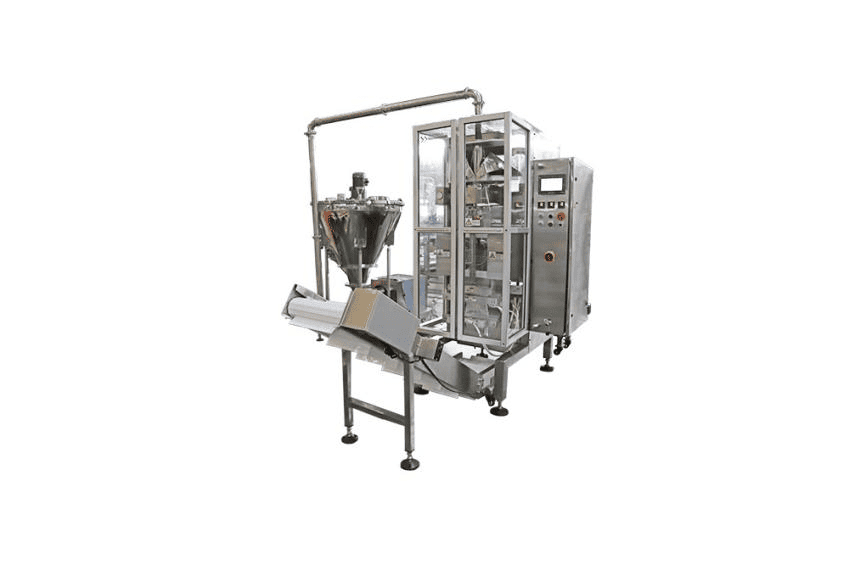
- Technical Strengths: When equipped with specialized anti-drip nozzles and liquid-tight sealing jaws, VFFS machines offer rapid production rates and massive savings on material costs compared to pre-made bags.
- Best For: Food-service bulk bags (e.g., 1-gallon bags of ketchup for restaurants), standard pillow pouches for dressings, and spouted pouches formed directly from the film web.
2. Premade Pouch Filling Machines
Instead of forming the bag from a roll, these machines automate the process of picking up a pre-manufactured pouch, opening it, filling it with sauce, and sealing it.
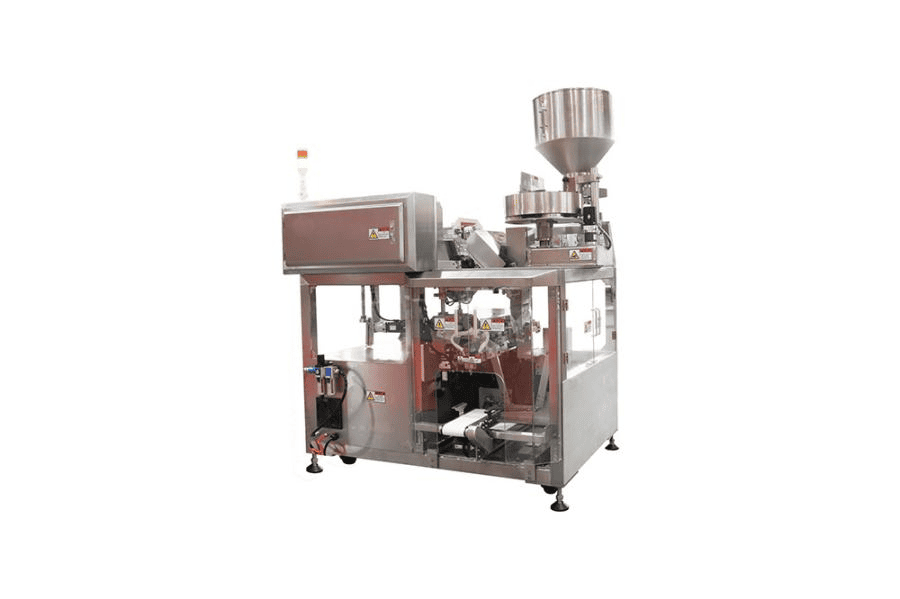
- Technical Strengths: Premade pouch packing machines handle highly complex bag styles that VFFS cannot, such as premium stand-up doypacks with custom shapes, heavy-duty zippers, or pre-welded corner spouts. They are the ultimate choice for retail shelf appeal.
- Best For: Premium pasta sauces, high-end salad dressings, large volumes of thick condiments, and any product requiring a visually striking, rigid stand-up pouch.
3. Sachet and Stick Pack Machines
These are highly specialized machines designed to produce tiny, single-serve portions. They form narrow tubes of film, fill them with a micro-dose of liquid, and seal them.
- Technical Strengths (The Multi-Lane Advantage): It is crucial to understand that blisteringly high speeds (e.g., 400+ packets per minute) are achieved exclusively through multi-lane configurations. A machine running 10 lanes simultaneously will produce massive output, whereas a single-lane entry-level machine will be much slower. They require highly precise micro-piston fillers to ensure every tiny packet across all lanes contains the exact same volume.
- Best For: Fast-food ketchup packets, single-serve soy sauce sticks for takeout, travel-sized salad dressings, and hotel amenity liquids.
4. Dedicated Piston Filler Bagging Units
These are heavy-duty, often custom-integrated systems where a robust piston filler is synchronized with a bagging unit specifically reinforced to handle extreme weights and viscosities.
- Technical Strengths: Built to withstand the high pressures required to pump dense pastes, these units prioritize consistent accuracy and power over sheer speed.
- Best For: Industrial-scale packaging of highly viscous pastes, bakery fillings, and heavy industrial oils.
Quick Selection Matrix: Sauce Packaging Technologies
| Machine Type | Best For (Product Type) | Packaging Format | Production Speed | Material Cost |
| VFFS (Liquid) | Bulk sauces, thin dressings | Pillow bags, large pouches | High | Low (Rollstock) |
| Premade Pouch | Premium, thick sauces | Stand-up doypacks, spouted | Medium to High | High (Pre-made) |
| Stick Pack / Sachet | Single-serve condiments | Tiny sticks, flat sachets | Extremely High (Multi-lane) | Low (Rollstock) |
| Piston Bagging Unit | Extreme viscosity pastes | Heavy-duty industrial bags | Medium | Varies |
*Note: Premade pouch speeds depend heavily on whether a single-station or high-speed rotary/duplex model is utilized.
Best Packaging Solutions for Different Sauce Types
Choosing the right sauce packaging machine starts with understanding the product itself. Not all sauces behave the same way during filling and sealing. Some are thin and free-flowing, while others are thick, sticky, or contain solid particles. Viscosity, texture, and packaging format all influence which machine structure and filling system will perform best. Below are some of the most common sauce categories and the packaging solutions typically used for each one.
Ketchup Packaging
Ketchup is a high-viscosity product that requires stable and accurate filling. Because it is thick and can continue to string or drip after dosing, the machine should be equipped with anti-drip filling nozzles and a system designed for clean cutoff. For ketchup packaging, common formats include small sachets, retail pouches, and larger food-service bags. In most cases, a piston filler is the preferred option because it can handle thick products with better volumetric accuracy than standard pump systems.
Mayonnaise Packaging
Mayonnaise is thick, creamy, and sensitive to hygienic handling. It needs a packaging system that can fill accurately without creating unnecessary product residue around the nozzle or seal area. A piston filling system is often the best choice for mayonnaise because it provides precise dosing for high-viscosity products. For this application, hygienic nozzles, easy-clean contact parts, and stable sealing performance are especially important. Mayonnaise can be packed in sachets, pillow pouches, stand-up pouches, or large-format bags depending on the target market.
Chili Sauce Packaging
Chili sauce can vary significantly depending on the recipe. Some products are smooth and pumpable, while others contain seeds, pulp, or chili flakes that require more careful handling. For sauces with particles, a piston filler with a rotary valve option is often recommended to reduce the risk of clogging or damaging the product texture. Common packaging formats include stand-up pouches, flat sachets, and single-serve condiment packs. The best machine choice depends on both viscosity and particulate content.
Soy Sauce Packaging
Soy sauce is a thin, free-flowing liquid, so it usually does not require the same heavy-duty dosing force as thick condiments. In this case, a pump filling system is often more suitable because it supports continuous, efficient filling for low-viscosity liquids. Soy sauce is commonly packed in small sachets, stick packs, and high-speed VFFS pouches, especially for takeaway and food-service markets. For thin liquids like soy sauce, speed, filling stability, and leak-proof seals are usually the top priorities.
Honey Packaging
Honey is a special case because it is both thick and sticky. It requires accurate filling, controlled flow, and excellent anti-drip performance to keep the machine clean and the package seals uncontaminated. A precision piston filler is often the preferred solution for honey packaging, especially for small retail packs and single-serve sachets. Anti-drip sealing performance is critical because even a small amount of residue can affect seal integrity and pack appearance.
Salad Dressing Packaging
Salad dressing can range from thin vinaigrettes to thicker emulsified products, so machine selection depends heavily on the specific formula. Thin dressings may be filled efficiently with pump systems, while thicker dressings may require piston fillers for better control. Packaging formats often include retail pouches, sachets, and large food-service packs. For manufacturers producing multiple dressing types, flexibility becomes important, especially if one line needs to handle products with different viscosities.
The key takeaway is simple: the best sauce packaging machine is not determined by the word “sauce” alone, but by the exact product characteristics, required package style, and production goal. Matching the machine to the sauce type improves filling accuracy, reduces contamination, and helps ensure stable packaging performance.
Common Challenges in Sauce Packaging
Sauce packaging is more complex than many manufacturers expect. Unlike dry products, sauces can drip, splash, stick, separate, or contaminate the seal area if the machine is not properly configured. These issues can reduce packaging quality, increase downtime, and create unnecessary product waste. Understanding the most common challenges can help buyers choose a machine that fits their product and production environment more effectively.
Dripping After Filling
One of the most common problems in sauce packaging is dripping after dosing. Thick sauces such as ketchup, honey, and mayonnaise may continue flowing after the fill cycle ends, especially if the nozzle design is not optimized. This can lead to dirty package surfaces, poor seal quality, and product waste. Machines with anti-drip nozzles or controlled cutoff systems are essential for maintaining clean and consistent operation.
Nozzle Contamination
Sauce residue can accumulate around filling nozzles over time, especially when packaging sticky or high-viscosity products. This buildup can affect filling accuracy, hygiene, and machine cleanliness. In applications with frequent product changeovers or strict sanitary requirements, easy-clean nozzle design and hygienic construction become extremely important.
Inaccurate Dose for Thick Sauces
Thick sauces are harder to control than free-flowing liquids. If the filling system is not matched to the product viscosity, the machine may struggle to deliver consistent volume in every pouch or sachet. Underfilling and overfilling both create problems, from customer complaints to unnecessary product giveaway. For high-viscosity sauces, piston fillers are usually better suited than basic pump systems.
Sealing Area Contamination
If sauce splashes, strings, or drips into the sealing area, the package may not close properly. This can result in weak seals, leakage, and shortened shelf life. Seal contamination is one of the most important reasons why sauce packaging lines need both precise filling control and stable machine timing. Proper nozzle positioning, synchronized filling, and clean product cutoff are all essential for reliable seals.
Packaging Chunky Sauces Without Damage
Some sauces contain particles such as vegetable pieces, seeds, herbs, or chili flakes. These products require special attention because standard filling systems may crush particulates, clog, or create inconsistent doses. For chunky sauces, the machine should be designed to handle solids gently, often with rotary valve piston fillers and larger flow paths that protect both accuracy and product appearance.
Maintaining Hygiene and Easy Cleaning
Sauce packaging equipment must be easy to clean and maintain, especially in food production environments where hygiene standards are strict. Sticky residues, product splashes, and difficult-to-access contact parts can all increase cleaning time and contamination risk. Machines with hygienic contact surfaces, stainless steel construction, and easy disassembly are better suited for efficient daily operation.
In practice, many packaging problems are not caused by poor machine quality, but by a mismatch between the product and the machine configuration. Choosing the right filling technology, nozzle design, and package format can prevent these issues before they affect production.
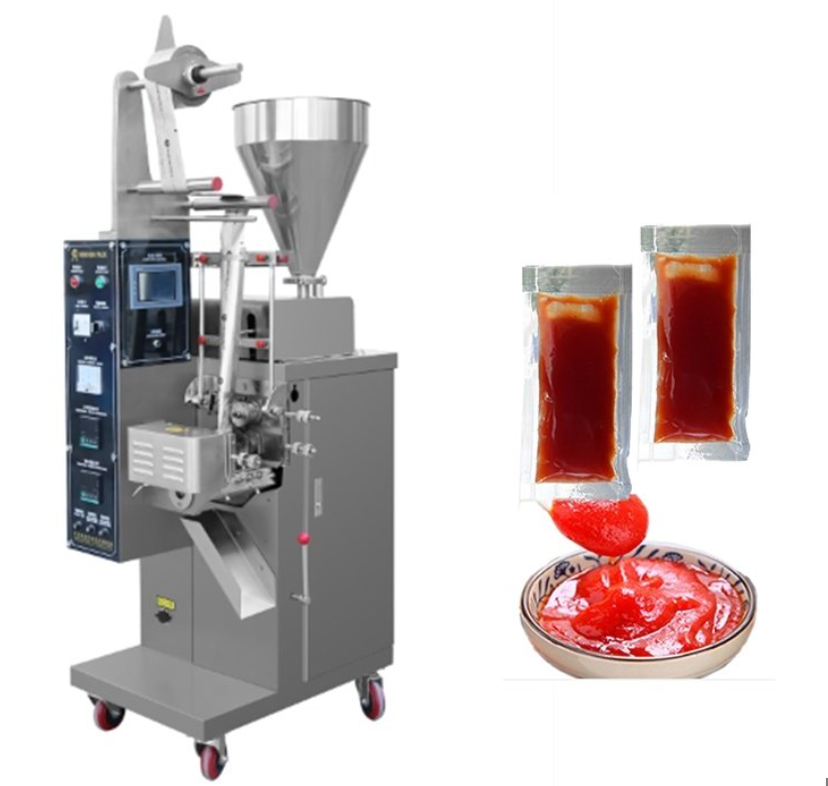
Sauce Packaging Machine Price: What Affects Cost?
The price of a sauce packaging machine can vary widely depending on the product type, packaging format, level of automation, and technical requirements. For this reason, there is no single standard price that fits all sauce packaging projects. Instead of focusing only on the initial machine cost, manufacturers should look at the factors that influence both investment level and long-term operating efficiency.
Machine Type
Different machine architectures come with different cost levels. For example, a VFFS machine for standard liquid pouches is usually more cost-effective than a premade pouch filling machine designed for premium stand-up packaging. Sachet and stick pack machines, especially in multi-lane configuration, may also involve different investment levels depending on output expectations.
Filler System
The filling system has a major impact on total machine cost. Pump fillers are often suitable for thin liquids and can be efficient for simple applications, while piston fillers are generally more robust and accurate for thick or viscous sauces. If the product contains particles, the system may require rotary valves or other specialized components, which can further increase the cost.
Production Speed
Higher-speed machines usually require more advanced control systems, more stable mechanical design, and stronger synchronization between filling and sealing functions. As speed requirements increase, the machine price typically increases as well. However, for some products, investing in higher speed may improve productivity and reduce labor cost over time.
Package Format
The required package format also affects cost. Sachets, pillow bags, stick packs, stand-up pouches, zipper pouches, and spouted pouches all require different levels of machine complexity. A machine designed for simple sachets will usually be less expensive than one handling premium premade pouches with spouts or special shapes.
Product Viscosity
Thin liquids are generally easier to fill than thick, sticky sauces. As viscosity increases, the machine often needs stronger filling force, more accurate dosing control, and better anti-drip performance. These technical requirements can raise the overall machine cost.
Particulate Handling
If the sauce contains chunks, seeds, herbs, or vegetable particles, the filling system must be designed to pass solids without clogging or damaging the product. Machines for chunky sauces often need larger nozzles, rotary valves, and reinforced product paths, which can increase both equipment cost and engineering complexity.
Hygiene Level
Food manufacturers with strict hygiene standards may need additional features such as stainless steel construction, sanitary design, CIP compatibility, easy-disassembly filling parts, and enhanced cleaning access. These features improve safety and maintenance efficiency, but they also influence the machine price.
Customization
Standard machines are usually more affordable than fully customized solutions. If the packaging line requires special pouch sizes, unique sauce characteristics, integrated coding systems, custom feeding tanks, or unusual layout requirements, the final cost may increase accordingly.
Line Integration
In many factories, the sauce packaging machine is not a standalone unit. It may need to connect with upstream mixing systems, product tanks, conveyors, checkweighers, carton packing equipment, or end-of-line automation. A fully integrated packaging line requires more engineering work than a single machine, which affects the total project budget.
In short, the price of a sauce packaging machine depends on much more than the machine name alone. The most cost-effective solution is the one that matches your product, output target, packaging style, and hygiene requirements while delivering stable long-term performance.
FAQs
Q: Can a sauce packaging machine handle both hot and cold filling?
A: Yes, but the machine must be specifically configured for hot filling (often 85°C - 95°C for pasteurization). This requires double-jacketed, heated hoppers to maintain the product's temperature. Crucially, buyers must factor in material costs: hot filling requires specialized, heat-resistant retort films or pouches that will not melt or warp. These specialized materials are significantly more expensive than standard PE films, which impacts the overall cost per package.
Q: How do these machines prevent sauce from dripping into the seal area?
A: Dripping liquid into the seal zone compromises the package integrity and causes leaks. Modern liquid packaging machines use "anti-drip" or "suck-back" nozzles. These pneumatic nozzles instantly cut off the product flow and pull a slight vacuum at the end of the fill cycle to ensure no stray drops fall into the seal area.
Q: Is it possible to pack dry powders and wet sauces on the exact same VFFS machine?
A: While the base VFFS machine (the film unwinding and sealing frame) is similar, the dosing equipment is entirely different. You cannot use a liquid piston filler for dry powders, nor an auger filler for liquids. Switching between wet and dry products on the exact same machine is highly impractical due to cross-contamination risks and the complex changeover of the dosing heads.
Q: What is the difference between a stick pack and a sachet?
A: A stick pack is a long, narrow tubular pouch with a fin seal running down the back and two end seals (resembling a stick of gum). A sachet is a flat, typically square or rectangular pouch sealed on all three or four sides (like a standard fast-food ketchup packet). Stick packs generally use less film per volume than flat sachets.
Q: Are premade pouch packing machines always slower than VFFS machines?
A: A standard, single-station premade pouch machine is generally slower than a VFFS machine because it must mechanically pick up, open, fill, and move each bag step-by-step. However, this is not a strict limitation. For high-volume production, manufacturers utilize Duplex (two-pouch-at-a-time) or high-speed multi-station Rotary premade pouch machines, which drastically increase output to meet demanding production quotas.
Q: What is the best sauce packaging machine for thick sauces?
A: For thick sauces such as ketchup, mayonnaise, and honey, a machine equipped with a piston filling system is usually the best choice. Piston fillers offer better control and more accurate dosing for high-viscosity products. The ideal machine also depends on the package format, production speed, and whether anti-drip performance is required.
Q: Can one machine pack both liquid and viscous sauces?
A: In some cases, yes. A flexible sauce packaging machine can handle both thin and thick products if it is designed with the right filling system, controls, and cleaning process. However, if the viscosity difference is very large, one machine may not perform equally well for every product. Manufacturers should evaluate product range, output needs, and changeover requirements before choosing a multi-purpose solution.
Q: What is the difference between a sauce packaging machine and a liquid packaging machine?
A: A liquid packaging machine is a broader category that may include machines for water, oil, beverages, or chemical liquids. A sauce packaging machine is more specialized because sauces often have higher viscosity, sticky flow behavior, or particulate content. As a result, sauce packaging machines typically require more advanced filling accuracy, anti-drip control, and hygienic sealing performance.
Q: Which machine is best for sauce sachets?
A: For sauce sachets, the best machine depends on the product viscosity and output target. Sachet packing machines and VFFS machines are common choices for this format. For thin sauces, pump systems may work well, while thick sauces usually require piston filling for better accuracy and cleaner operation.
Q: Can a sauce packaging machine handle chunky sauces?
A: Yes, but not every machine is suitable for chunky sauces. If the product contains pieces of vegetables, seeds, herbs, or other particulates, the filling system should be specifically designed to handle solids without clogging or crushing the product. In many cases, a piston filler with a rotary valve is the preferred solution.
Q: What packaging material is best for sauces?
A: The best packaging material depends on the sauce type, shelf life requirement, and package format. Many sauce products use laminated films that provide good barrier protection against moisture, oxygen, and leakage. For sachets and pouches, the film should also support reliable heat sealing and good print quality. Products requiring longer shelf life or stronger protection may need higher-barrier structures.
Q: How do I choose between VFFS and premade pouch machines?
A: VFFS machines are often the better choice for high-volume production and lower packaging material cost because they use rollstock film. Premade pouch machines are better for premium packaging formats such as stand-up pouches, zipper pouches, or spouted pouches. The decision depends on your packaging style, budget, production speed, and brand positioning.
Q: What affects the price of a sauce packaging machine?
A: The price is affected by multiple factors, including machine type, filler system, speed, package format, product viscosity, particulate handling, hygiene level, customization, and line integration. A higher initial investment may be justified if it improves filling accuracy, reduces waste, and supports long-term production efficiency.
Q: How to Choose the Perfect Sauce Packaging Machine for Your Plant
A: To ensure maximum ROI and operational efficiency, plant managers and distributors should evaluate these three critical factors before requesting a quote:
- Assess Your Viscosity and Particulates: Is your product a thin soy sauce or a chunky salsa? This immediately dictates whether you need a standard pump filler or a robust piston filler equipped with specialized rotary valves to prevent crushing the vegetable chunks.
- Define the Retail vs. Food Service Goal: Who is the end-user? If you are supplying fast-food chains, a multi-lane Stick Pack machine is required. If you are launching a premium pasta sauce in supermarkets, a Premade Pouch machine running stand-up doypacks will provide the necessary shelf presence.
- Calculate Volume and Changeovers: How many bags per minute do you need, and how often will you change flavors? If you run a high-mix, low-volume facility, look for machines with tool-less changeovers and easily removable hoppers to minimize downtime during cleaning.